

School Social Work: An Introductory Guide
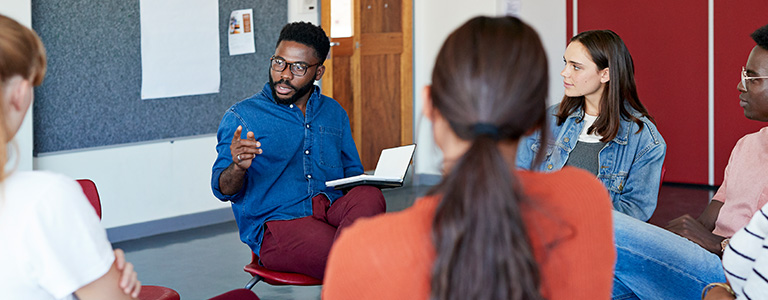
The morning bell rings and the hallways quickly empty as high school students file into their first classrooms of the day. About a half an hour later, the same student who has already been late a handful of times in the past two weeks walks through the front door of the school building. Instinctively, staff want to punish the student for her tardiness. But you notice she seems sad and disengaged. How is her emotional health impacting her school performance? Are there factors at home that are keeping her from fulfilling her potential? As a school social worker, it’s up to you to ask the questions that others may not to ensure every student has the opportunity to succeed.
Table of Contents
What Is a School Social Worker?
School social workers are trained mental health professionals who are licensed, certified, or credentialed based on their state’s requirements. They serve students, families, schools and communities by providing evidence-based behavioral, social-emotional, and mental health services, according to the School Social Work Association of America’s (SSWAA) definition of a school social worker. SSWAA writes that school social workers primarily promote safe and equitable school climates that support positive academic and behavioral outcomes and empower students to reach their full potential.
Job Description at a Glance
School social workers support students who are struggling with mental, emotional, social, behavioral and/or familial issues that are negatively impacting their academic performance and overall well-being, explains the National Association of Social Work (NASW) in its school social work resources and practice standards. Support can include individual and group counseling, conflict mediation, crisis interventions, resource navigation services, and the development and implementation of school programs. Professionals in the field can work in a number of settings, including public schools, private schools and academic programs that serve vulnerable populations.
School social workers can encounter numerous challenges, such as a lack of adequate resources to serve students, overwork, and managing the vicarious trauma and emotional burdens that their students carry. Nevertheless, school social workers may find it incredibly rewarding and sustaining to help children and adolescents empower themselves, tackle challenges, mature, and improve their lives.
Education Requirements
To work in schools and school districts, social workers must obtain a specific credential from their state government to practice. Depending on the state, school social workers may be credentialed through a state education agency (such as a department/board of education) and/or licensed through the state social work regulatory board. While school social worker licenses/certifications vary from state to state, the process to earn a school social worker credential generally begins with earning a BSW or (more commonly) an MSW from a CSWE-accredited program, plus school-based fieldwork/internship requirements set by the state. Exam requirements vary by state. Some roles require a social work license (which commonly involves passing an ASWB exam), while school-based certification/endorsement requirements may focus on approved coursework and supervised fieldwork rather than a separate state exam. For a state-specific example of the credentialing process, review the California Commission on Teacher Credentialing’s requirements for earning a Pupil Personnel Services (PPS) Credential, which includes the School Social Work specialization.
One core task of a school social worker’s job as explained by the NASW Standards for School Social Work Services, is to ensure that students are mentally, physically, and emotionally present in classrooms. Depending on the role and state requirements, public and private schools may employ school social workers and other clinically licensed mental health professionals to provide counseling and mental health interventions for students experiencing emotional, behavioral, or mental health challenges. An MSW with a focus on clinical social work and children can help aspiring professionals looking to enter the field of school social work.

Syracuse University
School of Social Work at Falk College
ADMaster of Social Work (MSW)
Syracuse University’s online Master of Social Work program does not require GRE scores to apply and is focused on preparing social workers who embrace technology as an important part of the future of the profession. Traditional and Advanced Standing tracks are available.
- Traditional and Advanced Standing tracks
- No GRE required
- Concentrate your degree in integrated practice or clinical practice
AD
Salary
The mean annual wage for child, family and school social workers in 2024 was $61,330, according to the Bureau of Labor Statistics (BLS). Among child, family and school social workers, social workers who worked in home health care services earned the highest annual mean wage of $77,640 in 2024, followed by those working in insurance carriers ($76,540), technical and trade schools ($74,580), elementary and secondary schools ($74,080), and specialty hospitals (except psychiatric and substance abuse) ($73,680). In 2024, California, New York, Texas, Pennsylvania, and Illinois had the highest employment levels for child, family, and school social workers.
Requirements to Become a School Social Worker
The requirements to become a school social worker vary by state. Candidates must obtain authorization to practice from their state’s board of education, teacher credentialing commission, or education department by earning a state-specific school social work credential. Prospective school social workers should research the specific educational, internship and examination requirements in their state.
Those interested in becoming school social workers must complete a CSWE-accredited Master of Social Work (MSW) program in a field that is relevant to school social work. School social work typically has a strong clinical component, as school social workers often counsel students and their families; thus, an MSW program with a concentration in clinical social work or an advanced generalist program with strong clinical classes may be ideal. Some schools offer concentrations or subconcentrations in school social work; prospective students should research accredited MSW programs carefully to ensure the program they choose will help them achieve their goal of becoming a school social worker.
Many states require school social workers to complete certain key classes to earn their credential to practice in schools. Andy Duffy, a school social worker at Aspire Monarch Academy in Oakland, California, outlined for OnlineMSWPrograms.com the specific courses he took to earn his PPSC – California’s credential for school social workers (Note: Academic requirements for school social worker certification can change at any time.):
- Social Work Practice in School Settings.
- Social Work and Education Policy.
- Introductory Practicum.
- Field Seminar.
- Field Placement (second year in a school setting).
“In addition to the classes required to get the PPSC, I chose to take Family Therapy, Social Work with Latinos, and Infant Development to supplement my knowledge going into work with younger kids,” Duffy said.
[Disclaimer: Certification requirements can change at any time and vary by state; therefore, the course recommendations in this section should be used for example purposes only. Students should check with their state’s board of education or teacher credentialing commission for the most up-to-date requirements.]
Nityda Bhakti, LMSW, works as a school social worker for The New Life School, an alternative day school in the Bronx, a borough of New York City that serves disadvantaged students struggling with mental, emotional and social barriers to learning. She suggested prospective school social workers “take courses in child and adolescent development, child abuse, substance abuse, school social work and clinical seminars.”
People who wish to practice school social work should also actively seek field practicum experiences in school settings. “Gain direct experience working in a school through an internship (field placement) or employment,” said Leandra Peloquin, PPSC, a school counselor at Notre Dame High School in San Jose, California. She also said students should not wait until they complete their graduate program to earn the necessary credential to practice in schools. “Although there are post-master’s PPSC programs, from what I understand, it is more convenient to achieve this credential while going through your master’s program.”
field. “If students are unable to get a field placement within a school, I suggest they research Behavioral Intervention Plans, Functional Behavioral Assessments, and Individualized Education Plans. If students know teachers or other school personnel I would suggest they reach out to those professionals,” she told OnlineMSWPrograms.com, “I also recommend that students join a School Social Work Association as a student member and see if they can interview or speak with a school social worker at a local school.”
As with any demanding yet rewarding profession, becoming a school social worker requires thorough planning, an honest evaluation of one’s professional strengths and motivations, and a significant investment of time. However, for some, the opportunity to support, guide and empower young people during some of the most challenging and impactful years of their lives can make the effort and constant demands of the profession worthwhile.

University of Denver
Earn an Online MSW From a Top-Ranked School at DU
The University of Denver’s online Master of Social Work program is CSWE-accredited and allowing students to customize their own MSW Pathways. GRE scores are not required.
- Complete the online MSW program in as few as 12 months if you have a BSW; if you do not have a BSW, the program may be completed in as few as 21 months.
- GRE scores are not required to apply.
- Customize your own Pathway to your interests.
What Does a School Social Worker Do?
The mission of school social work is to support students’ well-being and academic engagement. To accomplish this, school social workers collaborate with school staff to provide a wide variety of services to students and their families, including:
Implementation of Academic Support Programs
School social workers work with a team of teachers, counselors, and school administrators to develop and implement programs and plans for students struggling academically. While specific program titles can vary from school to school, common programs and plans that school social workers engage in include (but are not limited to):
Individual Education Programs (IEPs)
IEPs are free, individualized services delivered to students who have learning disabilities or other mental or physical barriers to academic performance. To create and implement an IEP for a particular student, school social workers, teachers, school counselors, and other school staff meet with parents to discuss the student’s needs and how to address them. Services can include accommodations in the classroom, mentorship/guidance outside of classes, and psychological counseling. IEPs are offered nationwide as part of the Individuals with Disabilities Education Act (IDEA).
Student Assistance Program (SAP)
SAPs are state-administered programs that offer prevention, support and early intervention services for students from kindergarten through 12th grade who are experiencing behavioral, familial, social and psychological barriers to learning. The Student Assistant Program began primarily as a substance abuse prevention and intervention service in school settings but later expanded into other areas of student support. “Each social worker [working in elementary schools in San Francisco] facilitates and coordinates the Student Assistance Program (SAP), which case manages students on an individual level, and also troubleshoots classroom and school-wide climate, behavior and discipline issues,” Maggie Brown, LCSW, PPSC, who works for San Francisco Unified School District, told OnlineMSWPrograms.com.
Response to Intervention (RTI)
RTI is a systematic approach to early identification of students who need academic and/or behavioral support. It combines parent involvement, regular student assessments, and different tiers of interventions to detect, prevent, and address students’ academic challenges. “The RTI process combines universal screening of all children in the general education classroom with high-quality instruction to try and improve learning outcomes and overall student support in the school setting,” Brown told OnlineMSWPrograms.com.
Restorative Justice Programs
Some schools use restorative justice programs (often called restorative practices) to promote constructive, relationship-centered approaches to discipline, rather than relying only on punitive or exclusionary measures. In Principal Leadership, NASSP describes restorative justice in education as an approach schools use to strengthen community, improve relationships, and respond to conflict in ways that focus on repairing harm and building trust. Examples of restorative practices can include facilitated restorative conversations or conferences, peer mediation, and community-building circles that encourage accountability and reintegration into the school community.
Emotional Support and Counseling
School social workers provide counseling for students encountering mental, emotional, social, behavioral, and/or familial barriers to academic performance, either as part of a student support program such as those listed above, or on an individual, as-needed basis. “I meet with my students once to twice weekly either in group or individually as mandated via their IEPs,” noted Bhakti. “I help the students identify their strengths as well as areas for growth, teach them effective problem solving skills which we practice in session, help them explore distress tolerance and emotion regulation techniques, have them identify and practice coping skills, and participate in goal formulation exercises regularly.”
Peloquin said she checks in with students regularly. “We meet with each of our students at least once a semester. We have an open-door policy and are able to meet with students more if wanted and/or necessary,” she explained. “By having counseling services as a normal part of the culture of the school, it operates as a protective factor for the students.”
In addition to preventative counseling sessions, school social workers counsel individual students as-needed. “I work with students in a wide variety of ways. Different styles of interventions are used to address academic, social and emotional issues,” Duffy told OnlineMSWPrograms.com. “I work with students individually to process trauma, discuss difficulties with following behavior expectations in class, family and friend difficulties, etc.”
School social workers typically involve parents in the counseling process. “I am in active communication with my students’ parents/guardians via phone and in-person meetings at the school,” Bhakti noted. “It is important that the parents be highly aware of their child’s progress, behaviors, and areas for work academically and social/emotionally.”
School social workers can also run therapeutic groups to help several students struggling with the same issue. “The groups that I run typically address developing improved social skills, increasing self-regulation at school, and addressing emotional issues (typically anxiety). I will also do class-wide discussions, particularly around issues of bullying and large-scale social difficulties in the class,” Mr. Duffy told OnlineMSWPrograms.com.
Crisis Interventions
In the event of a school crisis, such as campus violence or severe cases of bullying, school social workers are typically some of the first personnel to minimize harm to students, address the psychological ramifications of traumatic events, and support other school staff members in dealing with the crisis. For example, in serious cases of bullying or cyberbullying, school social workers will counsel the victims, providing them with emotional validation and empowering tools to help them manage the negative effects of the bullying. They may also hold counseling sessions with the children who bully their peers to help them address the underlying causes of their problematic behavior.
Student, Parent, and Community Education
In addition to engaging in academic support plans and individual and group counseling, school social workers can also develop programs and presentations that educate students and parents about serious issues occurring on school campuses, such as cyberbullying, campus-based violence, racism, depression and other emotional disorders, and substance abuse. “We plan and facilitate presentations for faculty, staff and parents related to adolescent mental health and development […and] coordinate health awareness programs for students to learn about many different issues that impact adolescents and our society as a whole,” Peloquin told OnlineMSWPrograms.com. “For instance, this year we are arranging for the YWCA Rape Crisis Center to speak to all classes about sexual violence and dating violence in April during Sexual Assault Awareness Month. We are fortunate to have the support of school administration to bring light to these very important issues for our student body, faculty and staff.”
Resource Connections
For students facing social, financial, familial, and/or behavioral barriers to academic performance, school social workers can provide resource connection and navigation services. These resources can include off-campus academic support programs, scholarships, family support programs, and low-cost counseling and mental health services outside school.
Challenges that School Social Workers Face
Some of the primary challenges that school social workers face include being unable to fully resolve the problems they encounter, working within a system that often lacks adequate resources, and shouldering the emotional burdens of students and their families.
“One of the most challenging aspects of being a school social worker is knowing that there are students who are experiencing tremendous difficulty that I may never reach for one reason or another,” Peloquin said. “There are times where there is a lot to accomplish in the way of academic planning for students, while concurrently, there are students that need to be seen because they are in crisis or experiencing personal difficulty. […] I have just over 200 students, which is below the ideal student-to-counselor ratio of 1/250. In that way, we are so fortunate to have a caseload that is manageable, where many school social workers have far higher numbers.”
Bhakti said the challenges of adequately serving large student populations has even motivated some school districts to work with external social service agencies to ease the burden that school-based social workers and counselors face. “The Department of Education (DOE) generally hires only one school social worker per school and many times, a school social worker’s hours/time will be split between two different schools,” she said. “Such a large population of young people are served by the DOE and so many mental health and social issues present themselves within this population, that many social service agencies receive grants and/or get approval to be DOE vendors in order to host social workers at schools to provide counseling and additional supports to the school-based support team (SBST).”
Even as a school social worker at a smaller, specialized school, Bhakti noted the continual need to prioritize and move quickly without sacrificing the quality of counseling or care. “[The] school I work at currently is very fast paced, and crisis driven,” she said, “[G]iven the high levels of need of the majority of the students, it is a position that can easily lead to burn out if self-care is not adamantly practiced regularly and effectively.”
In academic environments with high student needs and low staff numbers, it may be easy for school social workers to feel overwhelmed. In her interview with OnlineMSWPrograms.com, Ms. Peloquin advised school social workers to stay present and attentive to make the most of the time they have with each student they counsel. “In having a large number of students with a limited amount of time to build strong relationships, I focus on being very present with the time we do have. I value learning about their lives both in and out of school. I let them know that I can hear anything and focus on what is important to them,” she said.
Working with vulnerable, underserved and at times even abused children and adolescents can also prove emotionally challenging. “It’s difficult to find out that a child has been abused or neglected. It always feels profoundly unfair and unfortunate, even when I know that the parents have the best of intentions,” Duffy told OnlineMSWPrograms.com, “I find some comfort in reminding myself of the importance and value of reporting abuse, but it’s just always very sad.”
Why People Become School Social Workers
The reasons why school social work can be demanding and difficult, such as investment in children’s well-being and the pain of seeing some of their needs unaddressed due to inadequate time, staffing and other resources, are also directly connected to why school social work can be incredibly rewarding. The relationships school social workers forge with their students and the lasting impact they can have on their clients’ lives during their formative years can be deeply gratifying and energizing.
Witnessing the important impact of one’s work is a notable reward of school social work. “I have also found safety planning to be a rewarding experience. Giving students a plan to keep themselves safe when things get dangerous at home is unnerving for me, but the students seem to experience genuine relief once the plan is in place,” Duffy said to OnlineMSWPrograms.com. “It’s also just super rewarding to be surrounded by awesome children all day!…A short conversation with a student can fill your cup for the rest of the day.”
Depending on the specific setting in which they work, school social workers can deeply influence their students’ lives. In her interview with OnlineMSWPrograms.com, Bhakti described how working at a small, specialized school serving underprivileged youth allowed her to witness and actively participate in their progress towards their academic and personal goals. “After working in an outpatient mental health clinic with adolescents, which did have its benefits and I did enjoy, I wanted to really get to know the children whom I was trying to help,” she told OnlineMSWPrograms.com. “I realized that seeing a child five days a week for hours within each day, and within one of their most natural social environments, is much more telling of their strengths and targeted areas for growth, as opposed to what can be observed once a week, within 45 minutes in an office setting.”
Working with young people who are resilient, determined and invested in their development despite their struggles can also be deeply fulfilling. “Adolescence can be amazing and exciting, as well as confusing, difficult and painful. I feel very fortunate to be able to support students during this time in their lives,” Peloquin said, “The most rewarding experiences that I have had working at Notre Dame have been the relationships that I have been able to build with students.”
“I do feel like I am making a difference in the lives of young people who are at a developmental time filled with inner chaos and conflict–but also a time when their true spirits and identities are beginning to shine,” said Bhakti, “[T]hey are beginning to search for meaning in their lives and come into themselves. It is great work!”
Note: For more information on how to become a school social worker, please see our How to Become a School Social Worker article.
Information last updated February 2026.